TOEFL Writing vs IELTS Writing: Score Rubric Comparison
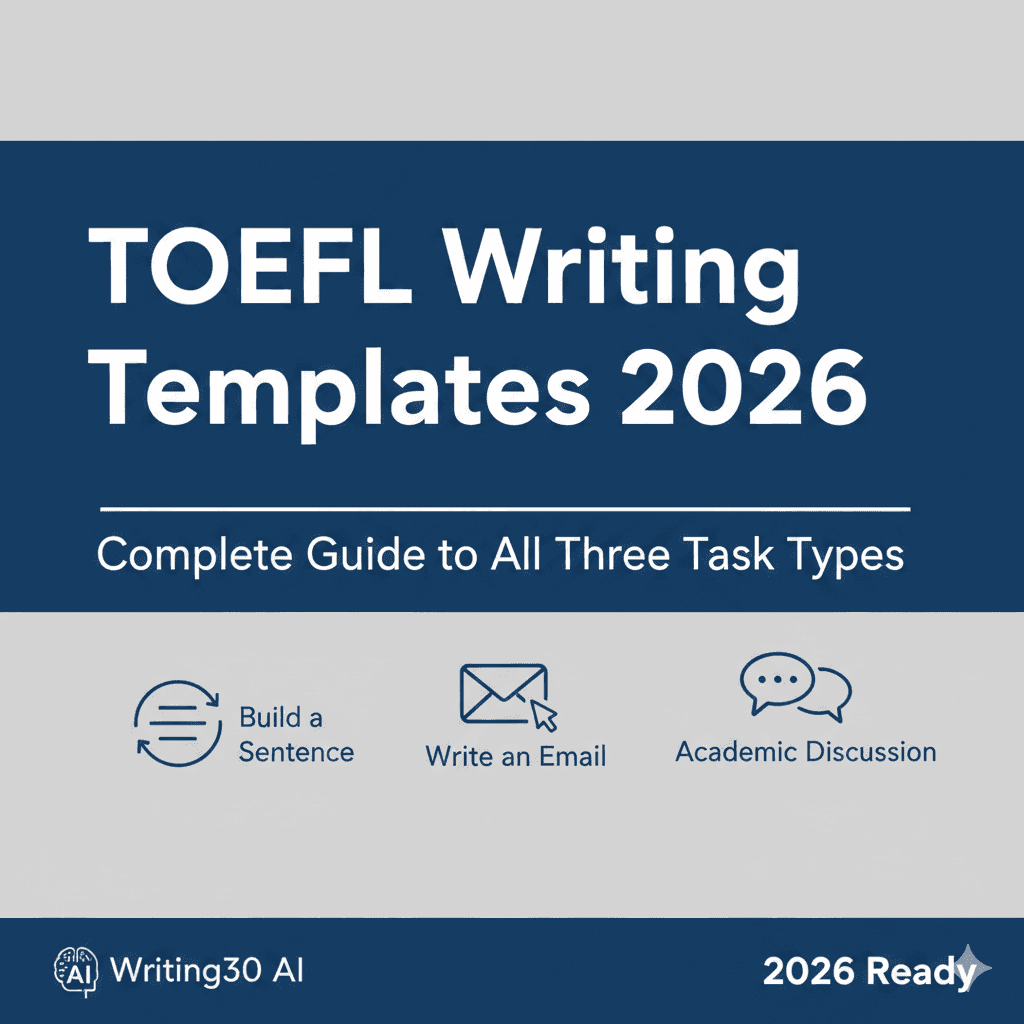
When preparing for English proficiency tests, understanding the differences in the writing sections of the TOEFL and IELTS is crucial. Each test has its own unique format and scoring criteria, which can significantly impact a student's preparation strategy. In this article, we’ll explore the nuances of the TOEFL and IELTS writing sections, including their formats, scoring rubrics, and the types of students who may find one easier than the other.
TOEFL and IELTS writing: format differences first
The TOEFL and IELTS writing sections are designed to assess a candidate's ability to express ideas clearly and effectively in written English, but they do so in different ways.
TOEFL Writing Format
The TOEFL writing section consists of two tasks:
- Build a Sentence (~6 minutes): Candidates are tasked with rearranging a set of words to form a coherent sentence. For example, they might need to organize the following words: "cat", "the", "sat", "on", "mat". A successful arrangement could be: "The cat sat on the mat."
- Write an Email (~7 minutes): Test-takers must compose a brief email that responds to a specific prompt. For instance, if the prompt is to request information about a course, a sample email might begin: "Dear [Instructor's Name], I hope this message finds you well. I am interested in learning more about the upcoming course on..."
- Academic Discussion (~10 minutes): This task requires students to write a more extended response on a given academic topic. For example, if the prompt asks about the impact of technology on education, a candidate might write: "Technology has revolutionized education by providing access to a vast array of resources and learning opportunities."
IELTS Writing Format
The IELTS writing section is divided into two tasks as well:
- Task 1: Candidates describe visual information, such as graphs or charts. For instance, if presented with a bar chart showing population growth, a sample response could start with: "The bar chart illustrates the population growth in various countries from 2000 to 2020, highlighting significant increases in urban areas."
- Task 2: This is an essay where candidates express their opinion on a given topic. An example prompt might be: "Discuss the advantages and disadvantages of living in a big city." A beginning sentence could be: "Living in a big city offers numerous benefits, such as access to diverse job opportunities, but it also presents challenges like higher living costs."
Understanding these format differences is essential for tailoring your study approach. For more details on how to prepare for each writing section, visit TOEFL vs IELTS.
How the TOEFL writing rubric works
The TOEFL writing rubric is designed to evaluate several key aspects of a candidate's writing, ensuring a comprehensive assessment. According to the ETS official TOEFL writing scoring documentation, the rubric focuses on four main criteria:
- Task Achievement: This measures how well the response addresses the prompt and fulfills the task requirements. For example, if a prompt asks for a description of a process, a well-structured response would clearly outline each step.
- Coherence and Cohesion: Writing must flow logically, with ideas connected through appropriate transitions. Phrases like "In addition to" or "On the other hand" help achieve this.
- Language Use: This assesses grammar, vocabulary, and overall language accuracy. For instance, a sentence like "The increase in digital learning tools has enhanced student engagement" demonstrates effective language use.
- Mechanics: Spelling, punctuation, and syntax are evaluated here. Errors in these areas can detract from the overall quality of writing.
Each open response is scored on a 0-5 rubric, and since January 21, 2026 official score reports show the writing section as a 1-6 band in half-point increments — the old 0-30 writing score is the pre-2026 scale, now retired. A comprehensive understanding of the TOEFL writing rubric can guide your preparation effectively. For more insights, refer to our TOEFL writing rubrics.
What IELTS band descriptors measure
The IELTS writing section employs band descriptors that define performance levels from 0 to 9. According to the official IELTS band-descriptor documentation, the following criteria are assessed:
- Task Achievement: Similar to TOEFL, this measures how well the candidate addresses the task. For example, an effective response to an IELTS Task 2 essay prompt would include a clear thesis statement and a well-supported argument.
- Coherence and Cohesion: This evaluates the logical flow of ideas and the use of cohesive devices. Effective use of linking words enhances this aspect, such as "Firstly," "Furthermore," and "In conclusion."
- Lexical Resource: This criterion assesses vocabulary usage. A high-scoring response would demonstrate a range of vocabulary, accurately and appropriately used. For instance, instead of repeating "important," a candidate might use "crucial" or "essential."
- Grammatical Range and Accuracy: This involves the correct use of grammar and sentence structures. A strong response might include complex sentences, such as: "Although there are challenges associated with urban living, the benefits often outweigh these concerns."
Understanding these descriptors can help test-takers focus their efforts on the areas that matter most. For more details on IELTS writing preparation, explore our resources on TOEFL writing scoring.
Scoring-language differences students should understand
While both tests aim to evaluate English writing skills, the language used in scoring can differ significantly. TOEFL's scoring descriptors emphasize clarity and direct response to the prompt, while IELTS descriptors focus more on the range of vocabulary and grammatical complexity.
For instance, TOEFL might describe a response as "effective" if it meets task requirements and is logically organized, whereas IELTS might describe a response as "good" if it shows a variety of sentence structures and clear argumentation.
Students preparing for both exams should familiarize themselves with these differences to maximize their performance. For guidance on switching between the two tests, refer to our TOEFL writing rubric explained.
How to adapt your prep if you switch exams
Switching from TOEFL to IELTS or vice versa requires an adjustment in preparation strategies. Here are some tips based on the unique characteristics of each test:
- Familiarize Yourself with the New Format: Understand the structure of the writing section for the exam you are switching to. For example, if you are moving from TOEFL to IELTS, practice writing essays that respond to Task 2 prompts.
- Practice with Sample Prompts: Use sample prompts from the exam you’re preparing for. This helps you get accustomed to the types of questions you will encounter. Visit our samples page for examples.
- Focus on the Rubric: Pay attention to the specific scoring criteria for the new test. Identify the areas where you need to improve based on the scoring rubrics discussed earlier.
- Time Management: Each test has different time constraints. Practice under timed conditions to improve your pacing. For instance, practice writing your IELTS Task 1 response in 20 minutes to simulate exam conditions.
By adapting your preparation accordingly, you can enhance your chances of success on your chosen exam.
Official sources to cite for rubric comparisons
When discussing the scoring rubrics for TOEFL and IELTS, it’s essential to reference credible sources. Some of the most authoritative resources include:
- ETS official TOEFL writing scoring documentation
- Official IELTS band-descriptor documentation
- University admissions pages that compare TOEFL and IELTS requirements to provide insights into institutional expectations.
Citing these sources not only adds credibility to your preparation strategy but also ensures you have the most up-to-date information on scoring criteria.
FAQ
Which writing test is harder, TOEFL or IELTS?
The difficulty level can vary depending on the individual's strengths. Some students may find the structured tasks of TOEFL easier, while others may prefer the flexibility in writing style in IELTS.
How can I switch prep strategies between TOEFL and IELTS?
Focus on understanding the specific formats and rubrics of the exam you're transitioning to. Use practice prompts and familiarize yourself with the scoring criteria.
Where can I find official sources for rubric comparisons?
Refer to the official TOEFL and IELTS websites, as well as university admissions pages that outline requirements for both tests.
In conclusion, understanding the differences in the TOEFL and IELTS writing sections can significantly enhance your preparation. By familiarizing yourself with the unique formats, scoring rubrics, and adapting your strategies, you can approach your writing test with confidence. For more resources and practice, visit our blog or check out our samples for examples that align with both TOEFL and IELTS expectations.
Next practice step
After reading this guide, practice one timed response on Writing30 and compare it with TOEFL sample answers. If you need the full current task breakdown, use the TOEFL Writing Practice 2026 guide.
Tags
Ready to Improve Your TOEFL Writing?
Get instant AI-powered feedback on your TOEFL writing. Practice with real prompts and see your score improve.
Try Writing30 AI