Writing30 vs WritingLab for TOEFL Writing: Which Tool Is Better in 2026?
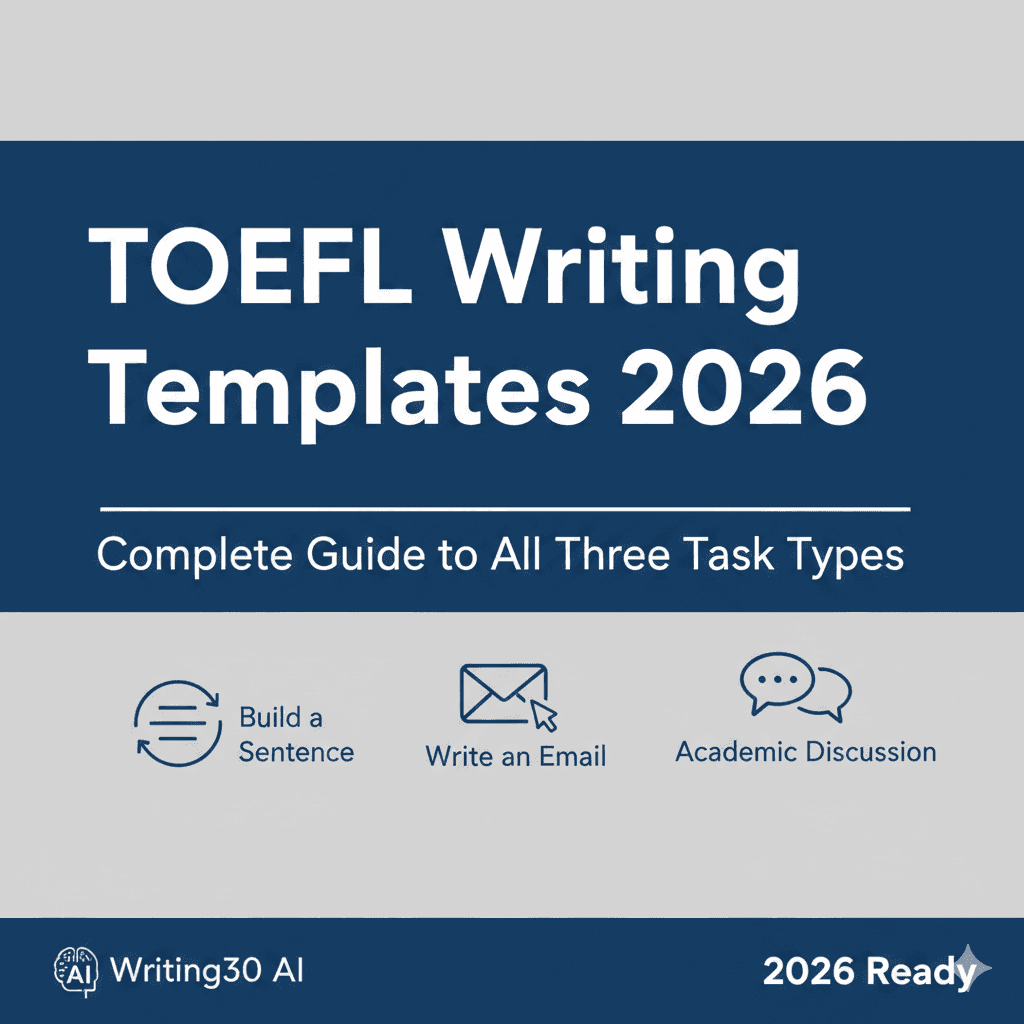
If you need TOEFL-specific writing practice in 2026, choose the tool that gives you task-accurate prompts, fast feedback, and a clear score-improvement workflow. This comparison will help you understand which tool fits your needs best, examining their features, effectiveness in improving scores, and suitability for different student goals.
Quick answer — who should choose Writing30 vs WritingLab
Writing30 is ideal for students who want structured practice aligned with the current TOEFL writing tasks: Build a Sentence, Write an Email, and Academic Discussion. Its task-oriented approach is excellent for targeted practice and skill refinement.
WritingLab, while a solid writing checker, is more generalized and may not focus exclusively on TOEFL-specific tasks. It might be better for students looking for a broader writing assessment tool rather than one specifically designed for TOEFL preparation.
What TOEFL students actually need from a writing practice tool in 2026
Understanding the current format of TOEFL writing tasks is crucial for effective preparation. The Writing30 format includes:
- Build a Sentence (~6 minutes): Students rearrange word arrangements to form coherent sentences.
- Write an Email (~7 minutes): Participants write a short email responding to a prompt — 80-120 words is the usual practice target.
- Academic Discussion (~10 minutes): This task asks students to produce a response of at least 100 words (target 100-150) on a given academic topic.
A good writing practice tool should provide prompts that mirror these tasks, offer timely feedback, and help students identify areas for improvement. For instance, if you’re practicing the Write an Email task, a prompt might be: "Write an email to a friend inviting them to a study group." This allows you to focus on relevant skills, such as tone, structure, and clarity.
Writing30 vs WritingLab feature-by-feature comparison
Task-Specific Prompts
Writing30 specializes in TOEFL tasks, providing prompts that reflect the actual exam format. In contrast, WritingLab offers a more generic set of writing prompts, which may not align with TOEFL requirements.
Feedback Mechanism
Writing30 emphasizes rapid feedback on each task, helping students understand their strengths and weaknesses immediately. WritingLab also provides feedback but may lack the specificity needed for TOEFL tasks, making it less effective for focused preparation.
Scoring System
Writing30 has a scoring system that mimics TOEFL scoring criteria. This means students receive a score based on the same rubric that ETS uses, allowing for more accurate progress tracking. WritingLab uses a general writing rubric which might not fully capture the nuances of TOEFL writing evaluations.
Practice Timings
Writing30’s structured timing—6 minutes for Build a Sentence, 7 minutes for Write an Email, and 10 minutes for Academic Discussion—enables students to practice under conditions similar to the actual exam. WritingLab may not provide these specific time constraints, which could impact a student's ability to manage time effectively during the TOEFL.
Resources and Support
Writing30 may offer additional resources tailored to TOEFL writing, such as study guides and practice tips. WritingLab focuses more on general writing support, which could be beneficial to a broader audience but less so for those targeting TOEFL-specific competencies.
Which tool is better for score improvement, feedback quality, and timed practice
For score improvement, Writing30 has a clear edge due to its targeted practice and alignment with TOEFL standards. Students aiming to move from a score of 20 to 24 will find that Writing30’s focused feedback and practice tasks help bridge the gap effectively.
Feedback Quality
Writing30 provides feedback that is both timely and relevant to TOEFL writing tasks. For example, if a student fails to include essential elements in their email, the feedback will specifically point this out, allowing for immediate correction. In contrast, WritingLab might provide general feedback that doesn’t address TOEFL-specific requirements, making it less effective for targeted improvement.
Timed Practice
The timed practice offered by Writing30 closely replicates the conditions of the TOEFL exam. This is critical for students who need to develop time management skills as part of their prep. WritingLab may not emphasize timed practice in the same way, which could hinder students' readiness for the actual exam.
Best choice by student goal (first practice, score 20 to 24, score 24+, weekly review)
- First Practice: New students should start with Writing30 because it introduces the TOEFL writing format and tasks clearly, allowing students to become familiar with the expectations.
- Score 20 to 24: Students aiming to improve from a score of 20 to 24 will benefit significantly from Writing30’s structure and feedback. The targeted practice and specific task focus help identify weaknesses and strengthen skills needed for a higher score.
- Score 24+ (pre-2026 0-30 scale; official 2026 reports use 1-6 bands): For those looking to maintain or improve a score of 24 or higher, Writing30 remains an excellent choice. Its emphasis on the TOEFL writing format ensures that students continue to refine their skills in a task-relevant manner.
- Weekly Review: If you’re in a review phase, WritingLab can supplement your learning, but you should still prioritize Writing30 for comprehensive TOEFL-focused practice.
Common mistakes students make when choosing a TOEFL writing checker
- Choosing General Tools: Many students select writing checkers that do not cater specifically to TOEFL writing tasks. This can lead to a lack of relevant practice and understanding of the exam format.
- Ignoring Feedback Quality: Some students may overlook the importance of receiving timely and specific feedback. Tools like Writing30, which provide precise critiques based on TOEFL criteria, are essential for effective learning.
- Neglecting Timed Practice: Failing to practice under timed conditions can hinder a student's ability to manage their time during the actual TOEFL exam. Writing30’s structured timing helps mitigate this issue.
- Relying Solely on One Tool: While it’s beneficial to have a primary tool, using a combination of resources, including Writing30 for focused practice and WritingLab for general writing improvement, can provide a more rounded approach.
Final verdict and when to use Writing30
In conclusion, Writing30 emerges as the superior choice for dedicated TOEFL writing preparation in 2026. Its alignment with the current task structure, emphasis on specific feedback, and focus on timed practice make it the best tool for students targeting the TOEFL exam.
Use Writing30 to enhance your skills, track your progress, and prepare effectively for the challenges of the TOEFL writing section. For more practice and tips, check our free TOEFL writing practice with AI feedback and best TOEFL writing app 2026.
FAQ
Is Writing30 or WritingLab better for TOEFL writing practice?
Writing30 is better for TOEFL writing practice due to its task-specific prompts and structured feedback aligned with TOEFL scoring criteria.
Does WritingLab give TOEFL-specific writing feedback?
No, WritingLab provides more generalized writing feedback, which may not effectively address the specific requirements of TOEFL writing tasks.
Can I use Writing30 for timed TOEFL writing practice?
Yes, Writing30 incorporates timed practice that mirrors the actual TOEFL exam format, helping students develop time management skills.
Which tool is better for improving a TOEFL writing score from 20 to 24?
Writing30 is more effective for this goal, as it provides targeted practice and immediate feedback on TOEFL-specific tasks.
Are there free TOEFL essay scoring tools that are accurate enough for practice?
While some free tools exist, they may lack the specificity and accuracy needed for TOEFL practice. Writing30 offers a more reliable option for practice aligned with TOEFL scoring.
What features matter most in a TOEFL writing checker?
Key features include task-specific prompts, timely and relevant feedback, a scoring system aligned with TOEFL criteria, and the ability to practice under timed conditions.
Should TOEFL students use a general essay checker or a TOEFL-focused tool?
TOEFL students should prioritize a TOEFL-focused tool like Writing30 to ensure they are practicing relevant skills and receiving appropriate feedback.
How often should I practice TOEFL writing each week?
Aim for at least 3-4 sessions a week to build skills effectively, with each session focused on a specific TOEFL writing task.
What is the fastest way to review mistakes after a TOEFL writing session?
Using a tool that provides immediate feedback, like Writing30, allows for quick identification and correction of mistakes, facilitating faster learning.
Which TOEFL writing tool is best for AI feedback in 2026?
Writing30 stands out for its specific focus on TOEFL writing tasks and its ability to offer tailored feedback, making it the best choice for students seeking AI-driven assistance in 2026.
Tags
Ready to Improve Your TOEFL Writing?
Get instant AI-powered feedback on your TOEFL writing. Practice with real prompts and see your score improve.
Try Writing30 AI